Midea is currently the third largest AC brand in Bangladesh by market share, sitting at roughly 15%, and it’s the brand most people search for once they’ve decided they want something better than the pure-budget options but aren’t ready to go fully premium. The catch is that Midea’s lineup is genuinely huge — everything from wall-mounted units around ৳40,000 to commercial floor standers priced up to ৳2,25,000 — and it’s not always obvious which one actually fits your situation.
This review walks through the full Midea range available in Bangladesh in 2026: what each model type does well, where it falls short, and how to pick the right one without overpaying or under-buying.
Who Is Midea? A Quick Background
Midea is one of China’s largest home appliance manufacturers, operating in more than 200 countries worldwide. In Bangladesh, the brand has been distributed exclusively by Elite Hitech Industries Limited since 2003 — making Elite the longest-standing authorized Midea partner in the country. Any Midea AC purchased through elite.com.bd carries full manufacturer warranty, backed by Elite’s local service infrastructure.
Midea’s Full AC Range in Bangladesh (2026)
Midea’s Bangladesh lineup splits broadly into residential and light commercial categories. On the residential side, there’s the Inverter Cooling Series, the Non-Inverter (On-Off) Series, Portable AC units, dehumidifiers, and air purifiers. On the commercial side, Midea covers Cassette Type, Ceiling Type, Duct Type, and Floor Standing units.
Across both categories, capacities run from 1 ton units for a small bedroom all the way up to 5-ton-plus commercial systems for larger spaces. It’s genuinely one of the more complete single-brand ranges available in the Bangladeshi market — which is part of why it comes up so often in searches, and part of why picking the right model needs a bit of guidance.
Midea Inverter AC Review (Residential)
The Midea Inverter Cooling Series is by far the most searched segment of the range, particularly in 1 ton, 1.5 ton, and 2 ton sizes.
What stands out:
- Variable-speed compressor — this is the core advantage of inverter technology, and it translates to noticeably better energy efficiency for households running the AC for long stretches every day.
- R32 refrigerant on newer models — more environmentally friendly than the older R410A standard, and increasingly the default across the range.
- Cooling performance — these units are known for reaching the set temperature relatively quickly, then holding it steadily rather than cycling on and off repeatedly.
- Noise — noticeably quieter than non-inverter equivalents once the unit settles into steady-state cooling.
- Best for — families running the AC 6+ hours a day, and anyone who’s particularly sensitive to their monthly electricity bill.
Key Midea Inverter Models to Consider
The 1.5 ton and 2 ton cooling-only inverter wall-mounted units are the most popular picks in this series, and for good reason — they cover the majority of standard bedroom and living room sizes in Bangladeshi homes. Pricing for the 1.5 ton inverter typically sits in the mid-range band, roughly ৳55,000–৳75,000, though it’s worth confirming current pricing directly since it shifts with specification and promotions.
For a 1 ton unit, buyers are usually looking at a smaller bedroom or a home office — a space where the room stays occupied for long stretches but doesn’t need the cooling capacity of a full living room. The 2 ton inverter, on the other hand, tends to make more sense for open-plan living rooms or larger master bedrooms, particularly in newer apartment buildings where ceiling heights and window sizes are a bit more generous than older construction.
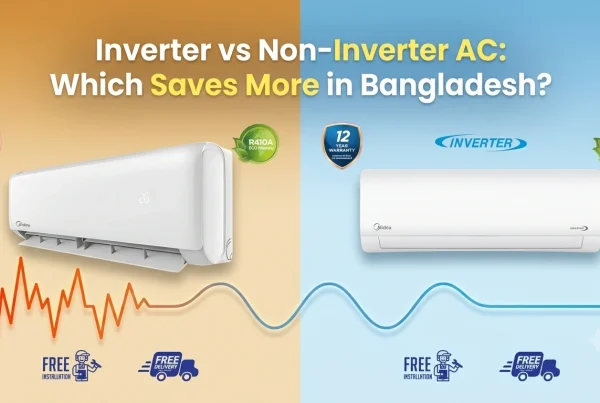
One thing worth knowing before you buy: the upfront price difference between inverter and non-inverter of the same capacity is real, but it’s not the full picture. Because the inverter compressor adjusts its speed rather than switching fully on and off, the electricity savings over a full cooling season can meaningfully offset that higher purchase price — particularly for a room that’s in daily use for 6 hours or more. For a room only used occasionally, that math changes, which is exactly why the non-inverter range below still makes sense for plenty of buyers.
Midea Non-Inverter AC Review (Residential)
The Non-Inverter On-Off Series is the simpler, lower-cost option, and it remains a genuinely solid choice for the right situation.
What stands out:
- Fixed-speed compressor — a straightforward design with fewer electronic components, which some buyers actually prefer for its simplicity.
- Good for — rooms used only a few hours a day, budget-conscious buyers, and guest rooms where heavy daily use isn’t expected.
- Pricing — starts noticeably lower than the inverter equivalents, which puts Midea’s non-inverter range in direct, competitive territory against Walton and Gree’s entry-level models.
- Common models — the 1 ton and 1.5 ton units are by far the highest-volume sellers in this series.
Midea Portable AC Review
This is a smaller niche within the range, but it’s worth a dedicated section — searches for Midea portable AC pricing are among the highest-converting queries we see, which tells you there’s real demand for this format.
The Midea 1 Ton Portable AC is built for a specific kind of buyer:
- Who it’s for — renters who can’t install a fixed split unit, temporary office setups, or rooms that simply don’t have a suitable exterior wall for an outdoor unit.
- How it works — single-hose or dual-hose design that vents warm air out through a window kit, no outdoor installation required.
- Limitation — it’s less energy-efficient than a split-type unit of the same capacity, runs a bit noisier, and needs a proper window vent setup, which doesn’t suit every room layout.
- Honest positioning — think of it as a flexible solution for a specific situation, not a permanent replacement for a split-type AC. If you can install a split unit, that’s still the better long-term choice.
Midea Commercial AC Review
On the commercial side, Midea covers four formats, each suited to a different kind of space:
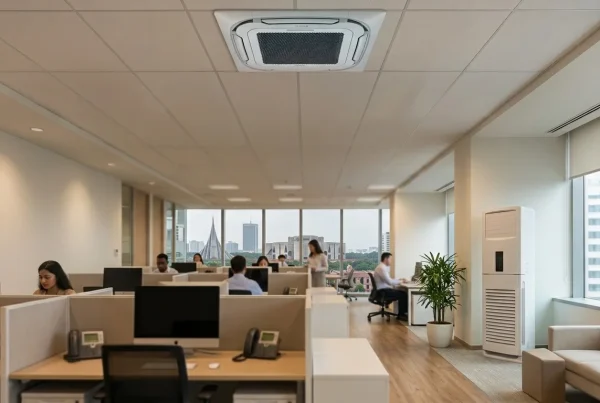
- Cassette Type — the most popular choice for offices and restaurants, since it sits flush in the ceiling and distributes air evenly across a room.
- Ceiling Type — a similar concept with a slightly different installation profile.
- Duct Type — the highest upfront installation investment, but the best option for multi-zone cooling across several rooms from a single unit.
- Floor Standing — the most flexible option, since it needs no ceiling work at all.
Some real examples from the current commercial range:
- Midea 2 Ton Floor Standing AC (MGFA24CR): ৳1,10,000
- Midea 3 Ton Floor Standing (MGFA36CR): ৳1,70,000
- Midea 4 Ton Floor Standing (MGFA48CR): ৳2,10,800
- Midea 5 Ton Floor Standing (MFGA60CR): ৳2,25,000
- Midea 2 Ton Duct Type AC (MHC24CR): ৳1,26,600
Cassette and ceiling type pricing varies more by specification and installation requirement, so it’s worth reaching out to elite.com.bd directly for an accurate quote on those. If you’re still weighing up which commercial format actually suits your space, our cassette vs split guide breaks that decision down in more detail.
Worth keeping in mind for commercial buyers: the floor standing units carry no ceiling work at all, which makes them the easiest to retrofit into an existing space — a real advantage for shop owners or restaurant operators who don’t want to touch the ceiling structure of a rented space. Duct type systems ask for more upfront investment and proper planning during a fit-out, but the payoff is even cooling across multiple rooms or zones from a single outdoor condenser, which cassette or floor standing units can’t match once you’re covering more than one or two rooms.
Cooling Performance — Honest Rating
Midea’s cooling performance is genuinely one of its stronger points, particularly in the inverter range:
- Strong — reaches the set temperature efficiently, especially on inverter models.
- Consistent — once the target temperature is reached, it holds steady with far less noticeable on-off cycling than many competitors at the same price point.
- High ambient performance — Midea’s inverter models are tested for performance in high outdoor temperatures, which matters directly here given Bangladesh’s 38–42°C summer peaks.
- Weak point — some entry-level non-inverter models are louder at startup than equivalent units from premium-bracket competitors. Worth keeping in mind if a quiet startup matters to you.
Energy Efficiency
Midea’s inverter models carry strong energy ratings, and the shift to R32 refrigerant on newer units is both more efficient and more environmentally friendly than the older R410A standard still found on some non-inverter models.
For commercial installations running 8–10 hours a day, the efficiency gap between inverter and non-inverter becomes a real monthly cost factor rather than a marginal one — worth weighing carefully if you’re buying for an office or restaurant. Compared against the rest of the Bangladeshi market, Midea’s inverter efficiency generally holds its own against Gree and Haier at similar price points. If you’re still deciding between inverter and non-inverter for your own situation, our inverter vs non-inverter guide covers the trade-offs in depth.
After-Sales Service & Warranty in Bangladesh
This is genuinely where Elite’s position as Master Distributor matters for buyers.
Residential Midea units typically carry manufacturer warranty coverage, generally structured as a shorter comprehensive warranty with a longer compressor-specific warranty — exact terms are worth confirming at time of purchase since they can vary by model. As Master Distributor, Elite Hitech handles warranty claims and servicing directly, which means one single point of contact for both the purchase and everything after it. You can reach support through the hotline on 16748 (Saturday–Thursday, 9am–7pm), or visit the showroom at 79 Bangabandhu National Stadium, Dhaka.
One honest note worth flagging: Midea’s service network in Bangladesh is stronger in urban centers than in more rural districts. If you’re buying outside Dhaka or another major city, it’s worth confirming local service coverage at the time of purchase rather than assuming it.
Midea vs Competitors — Quick Comparison
| Brand | Price Tier | Local Presence | Notable Strength |
| Midea | Mid-market | Imported, distributed since 2003 | Strong inverter tech, wide residential-to-commercial range |
| Gree | Budget to mid-market | Imported, well-established | Broad availability, competitive entry-level pricing |
| Walton | Budget | Locally manufactured | Lower cost, strong local manufacturing base |
| Haier | Mid-market to premium | Imported | Strong brand recognition, broad product range |
Midea generally sits above Gree and Walton on brand prestige and inverter technology, while remaining below premium-import brands like General or Fujitsu in the top-tier segment. Its real sweet spot is quality-conscious buyers who want something better than a pure-budget unit without stepping all the way up to full premium pricing.
Pros & Cons Summary
Pros:
- Wide range covering residential through full commercial under one brand
- Strong inverter technology with good high-ambient temperature performance
- R32 refrigerant on newer models, more environmentally friendly
- Over 20 years of authorized distribution history in Bangladesh
- Competitive pricing in the mid-market segment
Cons:
- Commercial units at higher capacities are premium-priced
- Service network is stronger in urban areas than in rural districts
- Entry-level non-inverter models can run louder at startup than some competitors
Best Midea AC for Different Needs
- Small bedroom on a budget → Midea 1 Ton Non-Inverter Wall Type
- Daily-use master bedroom → Midea 1.5 Ton Inverter Cooling Series
- Portable or rental solution → Midea Portable AC
- Small office or restaurant → Midea Cassette Type (2–3 ton)
- Large commercial space → Midea Floor Standing (4–5 ton) or Duct Type
Where to Buy Midea AC in Bangladesh (and Where Not To)
To be genuinely covered by manufacturer warranty, buy only through authorized distributors. Elite Hitech Industries is the Master Distributor of Midea in Bangladesh, and the full Midea AC range is available directly through elite.com.bd. Units bought through unofficial channels or grey-market marketplace sellers may not carry valid warranty coverage — something worth checking carefully before you buy, especially for higher-value commercial units.
You can visit the showroom at 79 Bangabandhu National Stadium, Dhaka, or reach out through the hotline on 16748 for pricing and stock availability.
Final Verdict
Midea holds up as a strong mid-market choice for most Bangladeshi buyers in 2026, particularly if energy efficiency and a wide range of commercial options matter to your decision. It won’t out-prestige the top-tier premium imports, and rural service coverage is worth checking beforehand, but for the price bracket it sits in, it’s a genuinely competitive option.
If you’re still narrowing down your choice, our best AC in Bangladesh 2026 guide compares Midea against the wider market to help you land on the right pick.